

Hey hustlers,
Google I/O is literally tomorrow. Elon just killed his own AI company. And a fresh CNBC report says companies that fired workers for AI are actually losing money.
Three stories this week that prove nobody has this figured out yet. Not even the biggest names in the room.
Let's take a look.
👾 WHAT'S NEW IN AI
1. Google I/O Is TOMORROW and the Confirmed Lineup Is Massive
Google I/O 2026 kicks off May 19 with a major Gemini model update likely Gemini 4, AI smart glasses built with Warby Parker and Gentle Monster, Aluminium OS (a brand new Android-based desktop operating system), and Googlebooks, a new category of premium Android laptops from Acer, ASUS, and Lenovo.
Google staffers are already testing an upgraded AI agent codenamed "Remy" billed as a "24/7 personal agent for work, school, and daily life."
Why you should care: If even half of this ships as announced, Google just made the most aggressive single-day AI play any company has attempted. A new model, new hardware, a new OS, and a 24/7 personal agent all in one keynote. Block off May 19.
2. Companies That Fired Workers for AI Are Actually Losing Money
CNBC compiled data on 23 S&P 500 companies that did AI-related layoffs. As of May 15, 56% of them saw their stock fall afterward. The average decline was about 25%. Nike down 35% after cutting 800 workers for automation. Salesforce down 32% after replacing support engineers with AI bots. Fiverr down 54% after laying off 30% of staff to become "AI-first."

Why you should care: A Columbia Business School professor told CNBC that if everybody is improving with AI simultaneously, "the baseline is just shifting and no one is more profitable." The "fire humans, hire AI" playbook is not working for most companies. The data is clear.
3. xAI Is Dead. Elon Musk Dissolved It Into SpaceXAI
In May 2026, Musk announced that xAI would cease to exist as a separate company, with Grok and X now being under the "SpaceXAI" AI division from SpaceX.
All 11 co-founders are gone. Grok development moves under SpaceXAI. And Colossus 1, the Memphis supercomputer xAI built for over $1 billion, is now being rented to rival Anthropic. Musk admitted the company was "not built right."

Why you should care: xAI lasted about two years as an independent company. It raised $12 billion, built one of the world's most powerful supercomputers, and then got absorbed into a rocket company. The supercomputer it built is now powering a competitor. That tells you everything about how fast alliances and strategies shift in AI right now.
👾 THE GOOD STUFF
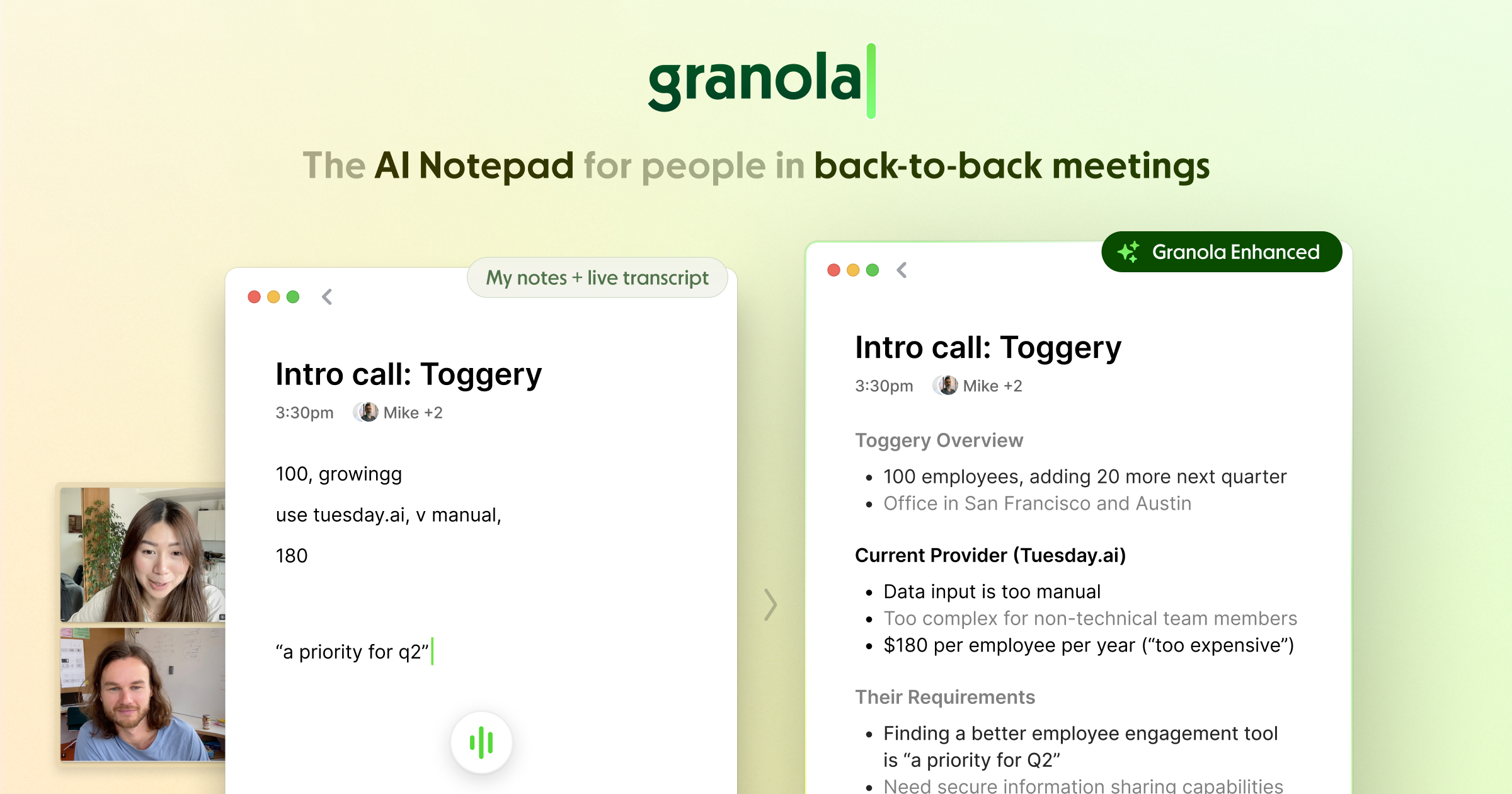
🔧 AI Tool: Granola
An AI notepad that sits in the background during your
meetings, listens, and writes structured notes automatically.
You type a few rough words during the call, Granola fills in the rest with
full context from the conversation.
Not a transcription tool. A thinking tool. Free tier available.
An open source framework that lets AI agents control your browser.
Navigate websites, fill forms, extract data, complete multi-step tasks autonomously.
The most popular browser automation repo on GitHub right now.
If you're curious what "agentic AI" actually looks like in practice,
this is where to start.
🎬 YouTube: OpenAI Codex Now Works from Anywhere
OpenAI just untethered Codex from your laptop.
This video breaks down what that actually means, how to use it from mobile, and whether it kills the need for tools like Dispatch.
👾 TO READ
FutureSim: Can AI Agents Predict the Future by Replaying the Past?
📎 https://arxiv.org/abs/2604.24618
Researchers built FutureSim, a system where AI agents forecast real world events beyond their knowledge cutoff by interacting with a chronological replay of actual news articles arriving in real time over a simulated period from January to March 2026.
What they found: The best agent managed just 25% accuracy. Many agents performed worse than making no prediction at all. The models that read the news and adapted in real time still couldn't reliably predict what would happen next
Why it's interesting: This week OpenAI restructured its entire distribution model and is heading toward an IPO. Commercial pressure and safety pressure are now pulling in opposite directions harder than ever. This paper asks what happens when the AI itself has a stake in that tension. It's the kind of research that sounds like science fiction until you realise these models are already running inside real products, real workflows, and real decisions.
🧵 Thread Drop

Nobody has this figured out. Not the trillion-dollar companies. Not the billionaires. Not the AI models themselves, apparently.
And that's exactly why paying attention matters more than ever.
👾 See you soon 👾
Want to work together?
If you're building something in AI and
think our audiences would vibe with it, let's talk.
