

Hey hustlers,
Three stories this week that sound like plot points from a sci-fi movie.
The US military just signed AI deals with 7 companies and officially blacklisted one of them. Meta quietly bought a startup that teaches robots to understand human behaviour. And OpenAI is building a phone with no apps. Just AI.
Its like the future is arriving in batches and with that,
here's your update.
👾 WHAT'S NEW IN AI
1. The Pentagon Signed AI Deals With 7 Companies and Officially Blacklisted Anthropic
The US Department of Defense announced classified-network AI deals with OpenAI, Google, Microsoft, Nvidia, Amazon, SpaceX, and Reflection AI.
All seven will now power military intelligence, logistics, and warfighter decision-making on the Pentagon's most sensitive networks. Anthropic was deliberately left out. The Pentagon branded the company a "supply chain risk" months ago after Anthropic refused to remove safety guardrails that would have allowed its AI to be used for autonomous weapons and mass surveillance.

Why you should care: This is the moment where "responsible AI" became a business liability worth billions. Anthropic is now missing out on federal contract revenue that its biggest competitors have locked in. The uncomfortable question underneath all of this: will the 7 companies that signed actually hold the line on ethics when the next contract is on the table?
2. Meta Just Bought a Startup That Teaches Robots to Understand Humans
Meta confirmed the acquisition of Assured Robot Intelligence, a startup building AI models specifically for humanoid robots. The team, including co-founders Lerrel Pinto and Xiaolong Wang, joins Meta Superintelligence Labs and will work directly with Meta Robotics Studio.
Their focus: enabling robots to understand, predict, and adapt to human behaviors in unpredictable, real-world environments. This is not a research experiment.
Meta is actively building in-house humanoid hardware and wants ARI's models to power it.

Why you should care: Meta's goal is to be the Android of the humanoid robot world. Not build the robots, but build the AI layer that runs inside all of them. That's a massive market play. Amazon also bought a humanoid robotics startup earlier this year. Google has been in this space for years. The race to build AI that works in physical bodies is now fully underway, and it's happening fast.
3. OpenAI Is Building a Smartphone Where Apps Don't Exist
According to supply chain analyst Ming-Chi Kuo, OpenAI is developing a smartphone with Qualcomm and MediaTek building the chip and Luxshare handling manufacturing.
The concept: no apps. Instead, a single AI agent layer that handles everything you'd normally use apps for, directly through conversation. Mass production is targeted for 2028. Qualcomm's stock jumped 12% the day the report dropped.
The device would capture your "full real-time state" including location, activity, and communication to feed the AI agent continuously.

Why you should care: Every major computing shift in history came with a new device that made the old one feel obsolete. The PC killed the typewriter. The iPhone killed the camera, the MP3 player, and the map.
If OpenAI pulls this off, it challenges both Apple and Google's stranglehold on how you access everything online.
The catch: OpenAI has never shipped hardware before, and the first AI-native phone concepts like Humane Pin and Rabbit R1 both failed hard. 2028 is a long way away. But the supply chain is real.
👾 THE GOOD STUFF
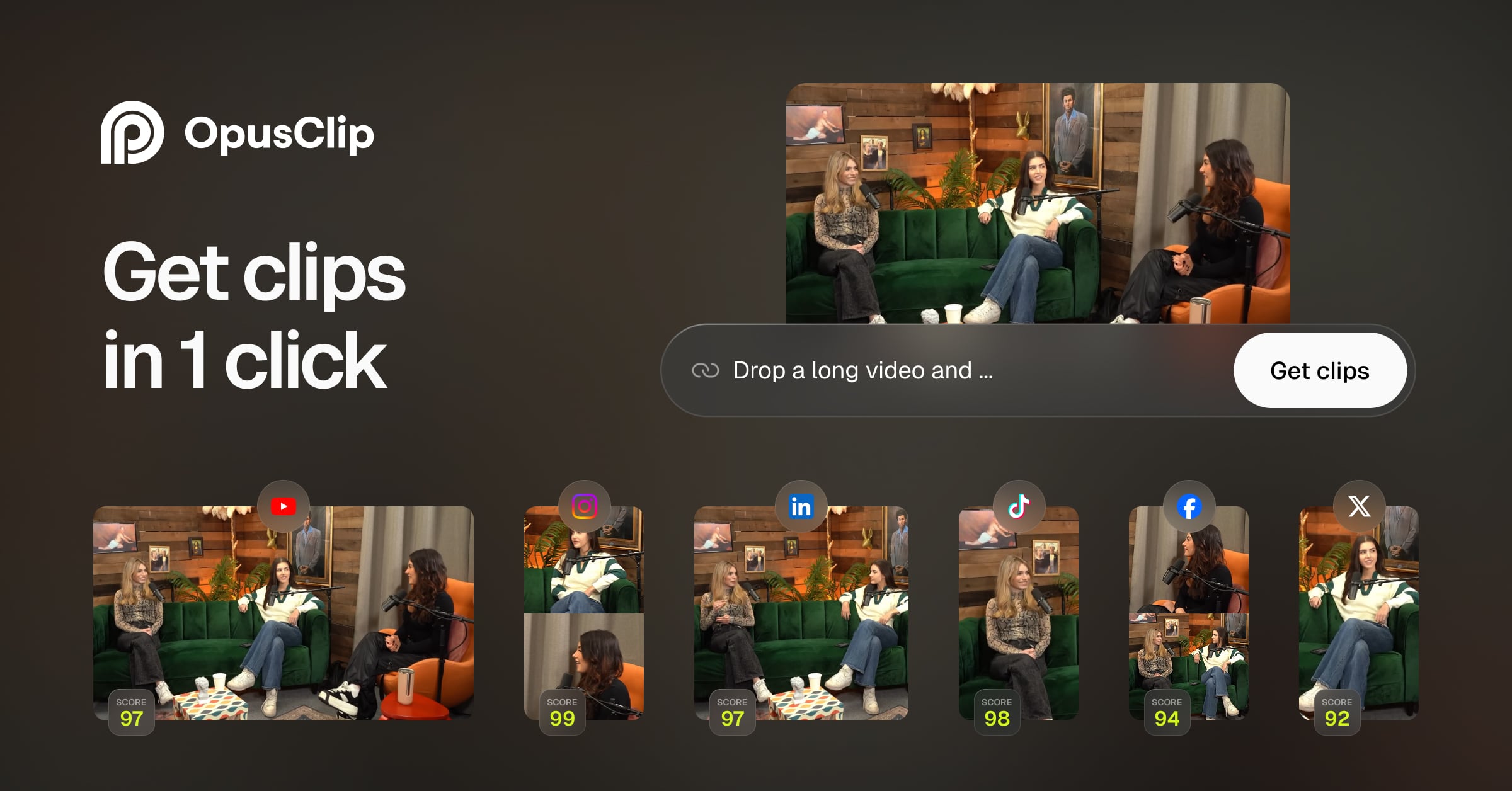
🔧 AI Tool: Opus Clip
If you create long-form content, YouTube videos, podcasts, or webinars,
Opus Clip is the most useful AI tool you're probably not using.
It watches your video, finds the most compelling moments, scores them
by virality potential, and automatically turns them into short clips optimized for Reels, Shorts, and TikTok. It adds captions, reframes for vertical video, and even schedules posting. One long video becomes a week of content with about 10 minutes of work.
🐙 GitHub: Significant-Gravitas/AutoGPT (184k stars)
With OpenAI building an agent-first phone and Meta putting AI in robots,
autonomous agents are the theme of the week.
AutoGPT is still the most starred AI agent framework on GitHub and just shipped a major update. If you want to understand how agent pipelines actually work under the hood before they become mainstream, this is where to start.
🎬 YouTube: Forget Prompt Engineering -
This Is What Actually Matters in AI
It explains that focusing only on “prompt engineering”
is not enough for building powerful AI systems.
There are 5 stages ADAPT, all explained in plain English, so you'll never feel
lost in another AI meeting
👾 TO READ
Why AI Models Fail When Humans Depend on Them Most
📎 https://arxiv.org/abs/2605.00742
Researchers studied what happens when AI models are deployed in high-stakes human decision support contexts, specifically looking at the gap between how well AI performs in controlled benchmarks versus how it performs when real humans are relying on it for real decisions.
What they found: AI models consistently degrade in reliability precisely in the situations where humans are most likely to defer to them rather than question them. The conditions that trigger overconfidence in AI outputs are the same conditions that trigger over-reliance in human users.
Why it's interesting: This week the Pentagon handed AI systems access to classified military networks for warfighter decision-making. This paper is the direct counterpoint: we do not yet fully understand what happens to AI reliability when the pressure is highest and the stakes are real. That gap between "benchmark performance" and "performance when it matters" is the most important unsolved problem in applied AI right now.

The Pentagon chose speed over safety guardrails. Meta is teaching robots to move like humans. OpenAI is building a phone with no apps.
None of these stories are about AI getting smarter. They're about AI getting deployed, at scale, into systems that affect real people in real ways. That's a different kind of development. And it's the one worth paying the most attention to.
👾 See you soon 👾
Want to work together?
If you're building something in AI and
think our audiences would vibe with it, let's talk.
